APF Research Roundup: Accessibility & Implementation of Mental Health Care

This week is Mental Illness Awareness Week, centered on the theme of access to care. Too many people and communities face barriers to mental health support, including limited culturally responsive and safe interventions.
At the American Psychological Foundation, we want to help break those barriers. We’re proud to fund research, programs, and initiatives that expand access to care, tailored to the diverse needs of individuals and communities. Our goal is to help ensure mental health support is available, equitable, and effective for everyone as we work towards a world where people are healthy, happy, and living with dignity.
Recently, APF has funded several projects dedicated to accessible, equitable, and effective mental health care. We are beyond grateful to our funding recipients who are actively doing this work, and to our community of donors and supporters that make this work possible. Read on to learn more about some of the incredible research & impact being driven by APF’s funding recipients!

Eman Tadros, PhD (she/her)
Syracuse University
Richardson-Lowman Serious Mental Illness Research Grant
Project Title
Reducing Serious Mental Illness through Romantic Attachment with Incarcerated Men in Relationships
Research Summary
I used data from the Multi-site Family Study on Incarceration, Parenting, and Partnering to examine how romantic attachment affects depression and PTSD symptoms in incarcerated men over an 18-month period. What I found was striking—those with more secure attachment styles had significantly fewer PTSD symptoms, suggesting that fostering romantic connection may be a powerful, underutilized tool for improving mental health during incarceration.
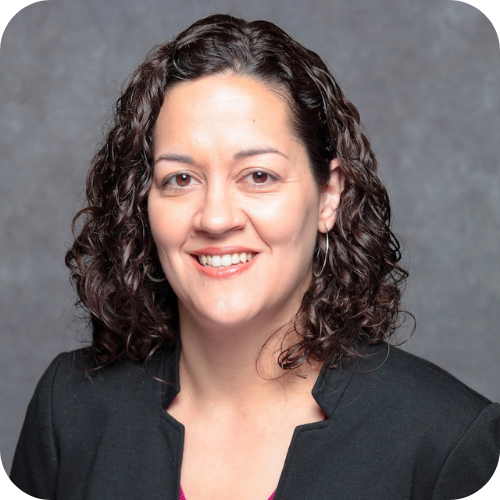
Kiara Álvarez, PhD (she/her)
Bloomberg Assistant Professor of American Health, Department of Health, Behavior and Society at the Johns Hopkins Bloomberg School of Public Health
2025 Direct Action Visionary Grant
Project Title
Enhancing Mental Health Support for Latine Families Facing Immigration Stress
Research Summary
Our team has developed an intervention program delivered by community health workers (CHWs) to caregivers of youth with suicidal ideation and/or behavior who are referred from pediatric primary care practices. This American Psychological Foundation Direct Action Visionary Grant provides the important opportunity to continue delivering the intervention to Spanish-speaking caregivers who face barriers in accessing mental health education and support, while also creating new training and intervention materials that our program’s CHWs need to effectively address the unique stressors facing these families. Through our work, we aim to make evidence-based suicide prevention available broadly, using an approach based in family strengths, with information delivered by trusted messengers, in the settings where families typically seek care.
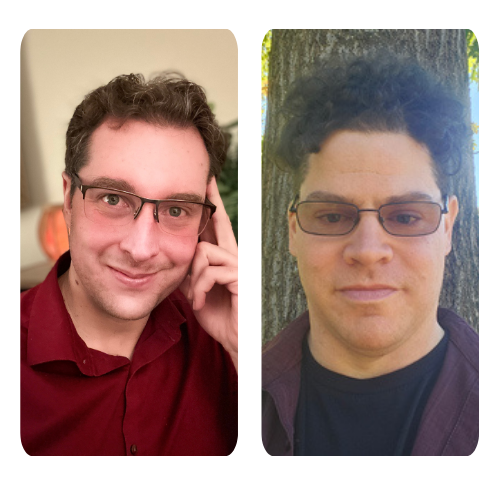
Vincent Pignatiello, PhD (he/him) & Jason Frederick, PsyD (he/him)
Antioch University
2024 John and Polly Sparks Grant for Rural First-Responders Mental Health Interventions
Project Title
Mindfulness-Based Wellness for First Responders
Research Summary
There is currently a need for mental health services for the first responders in the Greater Monadnock Region in New Hampshire. We hope that our will will to begin providing some of those needed services. Moreover, as part of this project we hope to establish training model to increase the number of psychologists graduating from the Antioch University New England PsyD program with the competence to work with first responders.

Alice E. Coyne, PhD (she/her)
American University
2024 Walter Katkovsky Research Grant
Project Title
Leveraging New Technologies to Optimize Psychotherapy Outcomes for Underserved Populations
Research Summary
Dr. Coyne’s research aims to identify and develop ways to capitalize on patient, therapist, and dyadic characteristics and processes that can enhance the effectiveness of psychosocial treatments for affective conditions (e.g., depression, anxiety). Within this broad area, she is particularly interested in studying strategies for personalizing treatment selection, intervention delivery, and therapist selection to the unique needs of each individual patient. The overarching goal of her research program is to help bridge the science-practice gap by increasing the effectiveness and precision of therapeutic interventions, including when delivered in routine practice settings that can reach historically underserved and marginalized populations.

Riley McDanal (she/her)
Stony Brook University
2024 COGDOP Graduate Student Scholarships
Project Title
Helping Young Adults Cope with Distressing Emotions: A Randomized Trial of an Online Single-Session Emotion Regulation Intervention
Research Summary
Riley’s research focuses on accessible, effective, and equitable mental health care. Her prior work has concentrated on the evaluation of scalable interventions, with an emphasis on their performance across demographic groups. She examines intervention effectiveness through a transdiagnostic lens, recognizing the broad impacts of many existing treatments. She is additionally interested in studying demographic disparities in psychopathology risk factors. Currently, she is developing an online, self-directed single-session intervention targeting emotion dysregulation, a transdiagnostic risk factor that is often exacerbated for marginalized populations. Her aim in creating and evaluating a scalable, transdiagnostic intervention is to combine accessibility with flexibility and efficiency, therein maximizing both reach and impact.

Alyssa Di Bartolomeo (she/her)
York University
2023 K. Anders Ericsson Dissertation Research Grant
Project Title
Investigating the Effects of a Novel Deliberate Practice Psychotherapy Training Intervention for Community Mental Health Workers
Research Summary
The primary goal of this research is to improve psychotherapy training practices with hopes of bettering client outcomes long term. Research to date, indicates that current models of psychotherapy training are not as effective in improving mental health outcomes as we might hope. As such, I hope to harness evidence-based techniques, like deliberate practice, to improve the development and maintenance of therapy skills in clinicians of all levels.
Want to contribute to projects like this and create impact through psychology? Donate to APF today!
Topics: Mental Health Recipient Update
Discover More
The Next Chapter for APF: The Official Launch of Direct Action
In this blog post, APF’s CEO Dr. Michelle Quist Ryder and Head of Philanthropy Faith Anderson reflect on the evolution of our newest Philanthropic Initiative, Direct Action. They explore how this effort is helping accelerate the journey from discovery to impact, creating new pathways for evidence-based approaches to improve lives, strengthen communities, and address pressing societal challenges.
Psychological science has the power to improve lives. Researchers, practitioners, and community leaders are constantly developing evidence-based solutions to some of society’s most pressing challenges, but these solutions can only create impact when it reaches the people and communities they were designed to serve. As communities face increasingly complex challenges, the Direct Action Philanthropic Initiative represents our long-term commitment to moving proven solutions beyond research settings, and into the hands of those who need them most.

From Action to Impact: A Conversation with Dr. Kiara Álvarez
Psychological research has the power to transform lives, but only when it reaches the people and communities who need it most.
APF hosted a webinar featuring our inaugural Direct Action Visionary Grant recipient, Dr. Kiara Álvarez. Led by APF Program Officer Dr. Rebecca Pasillas, this conversation explores how evidence-based psychological interventions can be effectively and meaningfully translated into real-world impact.
Psychology & Philanthropy In Action with Dr. Amy Hyoeun Lee: Community-Partnered Implementation
We’re catching up with Dr. Amy Hyoeun Lee, who received a Direct Action Visionary Grant for the project: Task-Shifting for Equitable Trauma-Focused Care: Community-Partnered Implementation of STAIR with Caregivers. This work builds on an established community partnership with Dr. Lee’s Lab for Youth Trauma Recovery and S.T.R.O.N.G. Youth, a local organization in Long Island specializing in youth gun and gang violence prevention.