
Partners in Impact with Dr. Doug Kimmel | APF Donor Spotlight

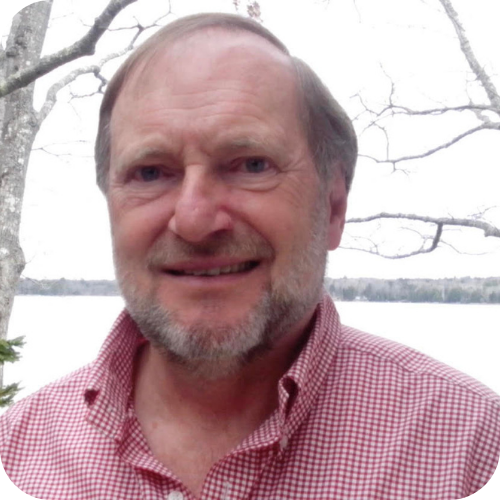
Partners in Impact is a space for APF to recognize the donors whose generosity and partnership allow psychology to address some of today’s most pressing challenges. In this edition, we are honored to feature Dr. Doug Kimmel.
Dr. Kimmel is a psychologist, researcher, activist, and longtime APF supporter whose work has helped build the trajectory of LGBTQIA+ psychology. He played a pivotal role in bringing some of the LGBTQIA+ psychological research initiatives to APF, particularly the Wayne F. Placek Grants, the Franklyn Springfield Awareness Fund, and the Springfield Research Fund Grants & Dissertation Fellowship.
Dr. Kimmel had a front-row seat to lots of change, both in the field and in the world. From the removal of homosexuality from the DSM and the founding of professional LGBTQ psychological organizations like ALGP (Association for LGBTQIA+ Psychologists ), APA Division 44 (Society for the Psychology of Sexual Orientation & Gender Diversity), and SAGE (Advocacy and Services for GLBT Elders), to the establishment of the Wayne F. Placek and Franklyn Springfield funds at APF, he has been at the forefront of many of the field’s milestones. Along the way, he made connections with influential leaders like Dr. Evelyn Hooker, and helped lay the groundwork for generations of LGBTQIA+ psychological research.
APF staff had the pleasure of sitting down with Dr. Kimmel for an oral history conversation. We explored the history of LGBTQIA+ psychology, the early development of APF’s initiatives in this area, and parts of Dr. Kimmel’s personal and professional journey. Dr. Kimmel describes himself as “someone who was born at the right time, and was there when things needed to be done, and connections were possible to be made.”
Initial Involvement with APF
Doug’s path to APF began through his broader involvement in the psychology community during the 1970s. After earning his doctorate in 1970, he quickly became active in APA Division 20 (Adult Development and Aging) while teaching at City College in New York. This was all happening during a period of enormous social and political change.
“It was a very exciting time,” Doug recalled. “The Vietnam War was winding down, there was a lot of protesting about that. The women’s movement was very active. And Stonewall had happened in 1969. So I was really in the forefront of all of that.”
As LGBTQIA+ psychologists began organizing professionally, Doug became increasingly involved with the Association for LGBTQIA+ Psychologists (ALGP), and what would eventually become APA Division 44. His formal connection to APF came through the Wayne F. Placek bequest, which ultimately led to the Wayne F. Placek Grants. Ultimately, Doug was drawn to APF because of a shared belief in the power of psychological research, and his confidence that APF could steward the funds responsibly. Keep reading, we’ll dive deeper into this later.
Landscape of Change
Long before LGBTQIA+ rights became part of mainstream conversation, Doug was already openly gay as a college student, and made a point to find and build community wherever he went.
“When I was at the University of Colorado, I was already openly gay as an undergraduate back in the ‘60s,” he said. “The University, for some amazing reason, had a gay community. Both men and women, and we met monthly. It was a very affirmative kind of environment that was quite remarkable for the time.”
Doug found affirming communities early in life through a progressive church community, a supportive campus pastor, and a gay-affirming therapist. By 1969, he and his husband had a marriage ceremony officiated by that same pastor in Boulder, Colorado, nearly half a century before marriage equality was law.
“So my path was really smooth in so many ways,” he reflected. “And I was so very fortunate, considering the struggles that so many people had along the way.”
Even so, by the time Doug moved to New York for his first faculty position at City College, homosexuality was still illegal in New York State. He recalled that the risks LGBTQIA+ people faced were enormous professionally, socially, and personally. He even remembers an era when newspapers publicly named people arrested in gay bars, and careers could be destroyed overnight.
“I was pretty nervous about getting my psychology license,” he recalled. “Because, at that time, homosexuality was illegal in New York State. People weren’t so much being arrested, but there was always the fear that you could be.”
Despite those fears, Doug remembers the early days of the LGBTQIA+ movement as very energized, because people did not let fear stop them from working towards social change. In the field of psychology, much of this work focused on building spaces where LGBTQIA+ psychologists could support one another, their clients, and challenge harmful narratives from within the field itself. During this time, Doug served on APA’s Committee on Gay Concerns, and worked on helping draft an amicus brief that challenged New York State laws criminalizing homosexuality.
Some Things Change, Some Things Stay the Same
Doug shared that he sees today’s political and cultural backlash against LGBTQIA+ rights and identity as part of a longer historical pattern that he has lived through.
“I think so much of what we did back then was really setting the stage, unfortunately, for the backlash that we are now experiencing,” he said. “Today, people are now trying to restore [those barriers].”
He also reflected on the HIV/AIDS epidemic, which arrived just as the LGBTQIA+ movement was gaining traction.
“It was a horrible, horrible loss,” Doug said of the AIDS epidemic. “We lost so many leading people in the field. It came along just as we were getting on our feet and getting the movement really going.”
But he also remembers the extraordinary ways communities stepped up. “The women stepped up and kept things going,” he said. “If it hadn’t been for the women, organizations like SAGE were not going to survive because of all the deaths.”
Having lived through criminalization, the AIDS crisis, and waves of backlash before, Doug’s perspective on today is based in resilience.
“Be brave,” he said simply. “It’s been worse before. And when we survived it once, we’ll survive it again.”
APF’s Wayne F. Placek Fund
We mentioned earlier that Doug became connected to APF through the Wayne F. Placek bequest. This story actually starts in the 1950s, through researcher Dr. Evelyn Hooker, whose groundbreaking research study showed that established experts could not distinguish between gay and straight men on standard psychological tests. This research ultimately led the American Psychiatric Association to remove homosexuality from the list of mental illness in their Diagnostic and Statistical Manual (DSM) in 1973. Evelyn Hooker’s work, which has been described in a film (Changing our Minds) and a book (Evelyn Hooker and the Fairy Project), eventually led to an understanding of sexual orientation as a normal variation among healthy people.
Wayne F. Placek was one of Evelyn Hooker’s research participants in this very study. Upon his passing, Placek left funds intended to remove the stigmas of homosexuality from this and future generations, and tasked Evelyn Hooker with the bequest. Hooker contacted Doug’s friend and colleague from APA, Steve Morin; and they became central in advising her where the funds should go.
“We thought that the most important thing we could do with those funds would be to get them into APF,” Doug explained.
Although APF had limited programming at the time, Doug and Steve believed that APF had both the infrastructure and expertise to steward the funds responsibly. For Doug, directing these funds toward APF was based on the transformative power of psychological research, which was the basis of Dr. Hooker’s philosophy as well.
“We knew the power of research,” he said.
Doug and his colleagues wanted to ensure that Placek’s funds remained focused specifically on LGBTQIA+ research. As the second elected President of Division 44, he helped design an oversight committee within APF.
“I wanted to make sure that it was going to be used for lesbian and gay research as Placek had intended. I wanted to make sure that it was going to be done in a community-focused, positive way, and not just absorbed into the bureaucracy. So we set up an oversight committee consisting of the four most-recent past-presidents of Division 44.”
Ultimately, the Placek Fund supported research that shaped legal and cultural change for generations:
“The Wayne F. Placek Grant] was a phenomenally successful program, because it funded some of the most critical research in the field leading to changes in terms of gay parenting, same-sex marriage, adoption. We had the empirical research we could point to, just as Evelyn [Hooker] had done.”
Doug’s friendship with Evelyn Hooker deepened over the years, and she lived to witness the field she helped build take shape. Doug recalled visiting her at home in Los Angeles later in her life, and found her with a stack of research journals beside her chair.
“She was reading the Journal of Homosexuality and other journals publishing lesbian and gay research,” Doug recalled. “She was absolutely thrilled. She would often comment about how she never dreamed such a thing would be possible.”
The Franklyn Springfield Funds: A New Era of LGBTQIA+ Psychology at APF
Since Doug had previously worked with APF on establishing the Wayne F. Placek Grant, he knew that APF was unique, especially because LGBTQIA+ research was simply not a major priority in the national funding landscape.
“So much of early LGBT [research] was funded by APF,” he said. “It was not being funded most other places.”
Doug met Franklyn Springfield through the NYC gay community. Springfield was a psychologist with a private practice on Manhattan’s Upper West Side. Doug recalls him as quiet, cultured, and private. He was not particularly engaged with the community, but thoughtful about the legacy he wanted to leave.
“I can see him now, his slim face and mustache, and a pipe. He was charming and very pleasant, but shy, reserved. His unique name, Franklyn with a Y, kind of fit his unique personality.”
Doug and his husband visited Springfield once at his Manhattan brownstone and talked about the kind of impact he hoped his funds might one day have. Doug believes the context of the AIDS crisis shaped that conversation.
“He wanted to do something meaningful with the funds he might be leaving at some point in life,” Doug said. “We were all aging at that point. And this was during the time of AIDS, when death was very much a part of our awareness.”
Doug arranged a meeting between Springfield and APF’s former CEO, Lisa Strauss. By then, the Placek Fund’s track record spoke for itself.
“I was eager to say that this was a good place,” Doug said. “That the funds would be well invested, and well supervised.”
Today, Springfield’s legacy lives on through a number of different programs, each with their own substantial impact:
- Franklyn Springfield Awareness Fund: The Franklyn Springfield Awareness Fund is dedicated to funding efforts to disseminate information to combat stigma and discrimination against the LGBTQIA+ Community. Upon his passing, Dr. Springfield left a generous bequest to APF to fulfill this goal.
- The Springfield Research Fund Grants: The Springfield Research Fund Grant supports research of contemporary LGBTQIA+ issues in an effort to dispel stereotypes and other negative information that leads to prejudice and discrimination.
- The Springfield Research Fund Dissertation Fellowship: The Springfield Research Fund Dissertation Fellowship supports graduate students at any stage of their dissertation who are interested in researching contemporary LGBTQIA+ issues in an effort to dispel stereotypes and other negative information that leads to prejudice and discrimination.
LGBTQIA+ Psychology’s Evolution
Doug reflected on witnessing LGBTQIA+ psychology transform from a time when homosexuality was classified as a mental illness, often treated cruelly with electroshock, lobotomies, and conversion therapy, to a field producing rigorous research that has shaped policy, legal decisions, and general understanding.
“Those interventions were so misguided because they were not based on evidence that they did any good,” he said. “They were based on the wrong kinds of beliefs, what was wrong with people, not what was right with people. They focused on putting wrong beliefs into practice, instead of looking at the empirical evidence.”
One of Doug’s own early contributions was a study of older gay men, a population largely ignored by both psychology and the broader LGBTQIA+ movement at the time.
“It dawned on me that so much of the gay movement was focused on young people,” he said. “But I knew that many gay people were growing old.”
Doug conducted the study throughout New York City in the 1970s and chose to publish his findings first in Christopher Street magazine, a popular gay publication, before academic outlets.
“The point of the study was that gay men in old age are as diverse as any other group of older people,” he explained. “I wanted the community to hear about it.”
Ongoing Commitment to APF
When we asked Doug why he continues to support APF today, he answered with no hesitation.
“It’s part of my DNA,” he said. “Psychological research is part of what’s important in life. It is what has changed so much for the better. It’s able to show reality. The myths, and the misconceptions, and the belief. … Here is empirical evidence of what is true. And the only way we can provide the truth is by doing research.”
For Doug, APF still represents the possibility of using science and evidence to create change in the world. This is exactly what drew him in decades ago.
“I’m so glad APF was there and is still here,” he said. “I speak not just for myself, but for all those people who were involved in those early days. We are very grateful for what you have done. I just hope you continue to keep up the good work in spite of the ill winds that are blowing.”
Hope for the Future
Doug’s hope comes from a few different areas – community, faith, kindness, and gratitude.
“This community is the basis of hope,” he said. “People coming together and believing that there is good in the universe.”
Doug and his husband remain active in their church community, which he describes as an enduring source of strength, and a reminder of what has sustained people through dark times before.
“Whether the moral arc is bending toward justice or not,” he reflected, “there’s hope, always, that it will.”
Doug hopes future generations continue building strong communities, supporting one another, and grounding their work in both compassion and evidence.
“Keep on keeping on,” he said. “Strengthen your colleagues. Be kind. Be kind to yourself.”
After reflecting on decades of change and progress, Doug offered one last final of advice:
“Be brave. It’s been worse before. It’s important to remember what is real, and what is important.”
Dr. Kimmel transformed the field of LGBTQIA+ psychology, helping psychological science work towards a more affirming world for LGBTQIA+ people. You can follow Dr. Kimmel’s lead, and partner with APF to invest in research that sees, affirms, and uplifts communities that need support.
Reach out to philanthropy@ampsychfdn.org to learn about ways you can partner with APF and create a lasting impact through the power of psychology.
Your gift to APF helps psychologists and researchers tackle today’s most pressing issues. Donate today and support evidence-based research and interventions that improve lives for generations to come.
Topics: LGBTQIA+ Partners In Impact
Discover More
Psychology & Philanthropy In Action with Dr. Yahaira I. Márquez: The Child Trauma Learning Program
We’re catching up with Yahaira I. Márquez, who is expanding access to evidence-based knowledge, resources, and treatment for childhood trauma in Guatemala
Psicología y Filantropía en Acción con la Dra. Yahaira I. Márquez: Programa de Aprendizaje sobre Trauma Infantil
Nos pusimos al día con la Dra. Yahaira I. Márquez, beneficiaria de la Direct Action Visionary Grant, cuyo trabajo demuestra el poder de la psicología y la filantropía para convertir el conocimiento basado en evidencia en acción significativa.
The Next Chapter for APF: The Official Launch of Direct Action
In this blog post, APF’s CEO Dr. Michelle Quist Ryder and Head of Philanthropy Faith Anderson reflect on the evolution of our newest Philanthropic Initiative, Direct Action. They explore how this effort is helping accelerate the journey from discovery to impact, creating new pathways for evidence-based approaches to improve lives, strengthen communities, and address pressing societal challenges.
Psychological science has the power to improve lives. Researchers, practitioners, and community leaders are constantly developing evidence-based solutions to some of society’s most pressing challenges, but these solutions can only create impact when it reaches the people and communities they were designed to serve. As communities face increasingly complex challenges, the Direct Action Philanthropic Initiative represents our long-term commitment to moving proven solutions beyond research settings, and into the hands of those who need them most.