Partners in Impact with Dr. Diana Slaughter Kotzin | APF Donor Spotlight

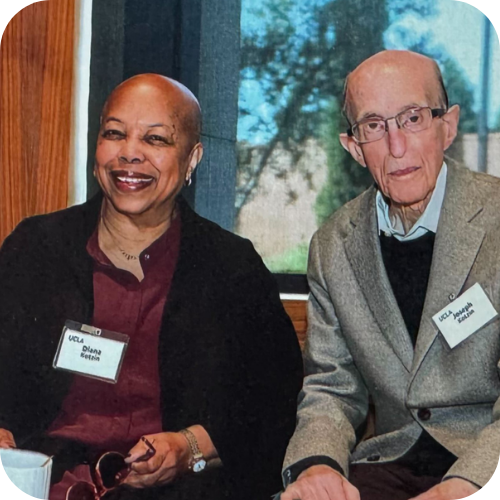
Partners in Impact is a space for APF to highlight our donors, whose generosity and partnership enables psychology to tackle some of today’s most important challenges. In our first edition, we’re thrilled to feature Dr. Diana Slaughter Kotzin, who co-founded the Dr. Diana Slaughter Kotzin and Mr. Joseph G. Kotzin Fund Grant. Established in 2022, this fund supports early career psychologists advancing research on child and youth suicide among African Americans.
In April of 2025, Mr. Kotzin passed away peacefully at home. Dr. Slaughter Kotzin subsequently expanded the fund in his honor, capitalizing on APF’s Direct Action Initiative to add an emphasis of dissemination and implementation, ensuring that this critical research reaches the communities it is meant to serve. Mr. Kotzin’s legacy is carried forward through this work, transforming research into care, practice, and prevention where it is needed most.
Read on for Dr. Slaughter Kotzin’s reflections on what inspired them to start a fund with APF, its impact so far, and the importance of translating research into impact.
Why We Started The Fund
The Dr. Diana Slaughter Kotzin and Mr. Joseph G. Kotzin Fund Grant was formally established in 2022, although its roots reach back much further, starting with when I met my husband. I met Joseph in the fall of 1962 when we were graduate students at the University of Chicago. Our careers took different paths (Joe found his calling in philanthropy; I trained as a clinical psychologist, and worked as a developmental and educational psychologist in academia), but we shared a passion for improving mental health care and helping others. This shaped a big part of our lives, especially in how we thought about giving back in ways that were meaningful. It was these shared values that ultimately inspired us to create the Dr. Diana Slaughter Kotzin and Mr. Joseph G. Kotzin Fund Grant.
In 2022, as the country emerged from the COVID-19 pandemic, we were deeply troubled by new data showing a significant rise in suicide rates among African American youth. This data was very different than what I had seen during my own training, when mental health concerns in Black communities were more often framed around externalized behaviors such as anger, aggression, or violence, rather than suicide. Joe and I found the data alarming- not only because of the severity of it, but because it revealed significant issues in how young people were experiencing and coping with the world. It raised urgent questions for both of us:
- Were stress, grief, and trauma being internalized in new ways?
- What social, economic, and cultural pressures were contributing to this change?
- How much of this increase reflected the broader mental health crisis brought on by the pandemic?
- How were young people, especially Black youth, coping with a world full of uncertainty?
- What can we do to help mitigate this?
As we searched for answers, it became clear that there was a pretty large gap in how research was responding to this crisis- there was a serious lack of clear, culturally grounded prevention and care efforts. Recognizing the urgency, we decided that supporting psychological research was the most meaningful way we could respond. In partnership with APF, we established a fund to deepen knowledge around suicide risk among African American youth, and support work that could ultimately save lives.
Why I Invested in APF
I have known of the American Psychological Foundation (APF) through its close collaboration and mission alignment with the American Psychological Association (APA), an organization that has been part of my professional life for decades, dating back to presenting my dissertation at the APA Annual Convention in 1969. Over the years my connection to APF became deeply personal, as I watched APF grow into a trusted leader in psychology, supported by many leaders in the field.
I was inspired by APF’s commitment to supporting rigorous science, their thoughtful stewardship, and their ability to connect donors, researchers, and communities. I trusted the staff’s expertise, access to leading researchers, and their ability to steward this work carefully and responsibly. With this trust and alignment, bringing our vision to APF felt natural. Through the high quality researchers and impactful projects we’ve supported, APF has proven time and again that this was the right home for our vision.
The Fund’s Impact So Far
Since we started the fund grant in 2022, we’ve supported four projects focused on understanding and addressing suicide risk among African American youth. These projects range from intervention development to community-engaged research, and are all grounded in the lived experiences of the youth.
Here’s a closer look at these projects:
- Dr. Colleen Walsh, “Project Vox: Their Voices for Prevention.”
This project examines how Black adolescent girls (ages 13-19) interpret and experience the intersection of community violence and suicide risk
- Dr. Tia Tyndal, PhD, “Bridging the Gap: A Collaborative Intervention Group for Black Youth at Risk for Suicide”
This project is developing a group intervention for Black youth with suicidal thoughts and behaviors. - Dr. Tennisha N. Riley, “A Youth-Engaged Approach to Understanding Risk and Protective Factors for Suicide Among Black Youth”
This project partners directly with Black youth through a Youth Ambassador Program, engaging them alongside researchers and community partners to better understand their lived experiences and root causes of suicide disparities. - Dr. Shabnam Javdani, “ROSES in the Educational Margins: Understanding and disrupting how the school to prison pipeline impacts suicide among black girls”
This project examines whether and how Black girls’ experiences of school pushout increases their risk for suicide and self harm, and will also explore whether a community-based advocacy program called ROSES can reduce the harms caused by school pushout by improving Black girls’ safety and overall wellness.
What stands out most to me is that these projects intentionally focus on youth voices and cultural context. Each project shows that suicide prevention must be grounded in trust between the researchers and communities, and of course, thoughtfulness and care. Beyond just identifying risk, these projects are also helping us to understand protective factors and pathways to healing and resilience. I’m proud to help bring this work to life and play a role in combatting the crisis, while simultaneously watching our investment make a difference where it matters most.
Looking Ahead: Dissemination, Implementation, and Direct Action
In more recent years, it’s become clear that the need for this work has only grown. Ongoing social, political, and cultural stressors continue to weigh heavily on young people, especially African American youth. Research is essential, but its impact is limited without the findings being shared, and put into practice.
When thinking about the future of the fund, it was important to me that the research findings were shared and utilized, and that the work reaches the people who can benefit most from it. This includes clinicians, educators, and community organizations working directly with challenged youth, their families, and caregivers.
In Joe’s honor, I expanded the fund’s focus to include dissemination and implementation, aligning closely with APF’s growing commitment to Direct Action. The APF Direct Action approach recognizes that research can reach its full potential when it informs real world practice and thus reaches people directly.
By broadening the fund’s scope to include dissemination and implementation, we’re ensuring that the research is actively shaping care, and that important findings in suicide prevention make their way directly to those on the front lines of the crisis.
Closing Thoughts
In closing, I am grateful to the researchers who are building a healthier, safer future for our youth. Supporting research that is actively changing the trajectory of young lives is a true privilege, and this expansion into putting that research to work is truly exciting.
I’m proud to partner with APF; I’m inspired by what the fund has accomplished so far, and I take pride in knowing that what began as a personal concern and a shared desire to make a difference has grown into work that is shaping suicide prevention efforts, informing practice, and thus giving young people well-deserved support.
Your gift to APF helps psychologists and researchers tackle today’s most pressing issues. Donate today and support evidence-based research and interventions that directly improve lives.
Follow Dr. Slaughter Kotzin’s lead and partner with APF to create meaningful, lasting impact through psychology! Reach out to philanthropy@ampsychfdn.org to explore partnership opportunities.
Topics: Child Psychology Children's Mental Health Direct Action Mental Health Where In The World Is APF
Discover More
On the Inside Looking Out: LGBTQIA+ Health, Policy, and the Efficacy of Hope
In this blog post, 2025 Fellow Dr. Aaron Hunt reflects on his fellowship journey, where he worked in the office of U.S. Senator Tammy Duckworth.

APF Research Roundup: LGBTQIA+ Physical & Mental Health
At APF, we proudly fund efforts that uplift LGBTQIA+ mental and physical health. Our programs advocate for care, policies, and evidence-based interventions that are accessible, equitable, and affirming.

2026 APF State of the Foundation
Hosted by APF President Dr. Melba Vasquez and APF CEO Dr. Michelle Quist Ryder, this event recapped APF’s impact in 2025 and celebrated the progress made possible by our incredible community. This event featured a first look at the 2025 APF Impact Report, including updates on our Direct Action programs, exciting new partnerships, and the stories and data that defined a truly transformative year for the Foundation (and for the future of psychology)! We also shared a sneak peek of upcoming initiatives that are designed to expand psychology’s reach where it’s needed most.